
Healthy Happy Intimate Adult Relationship, Uncategorized

Healthy Happy HHIA Relationships 13

Time and Time Again

Reality Check – Body (2)
Photo by Nina Varga on Scopio

Time After Time

I am back. This time to talk about just that: Time and its affect on our bodies, lives and relationships. Our last Blog lesson was focused on our bodies in the world and our interactions on the material plane. Now I want to talk about the time we spend here. What we do with it and what time does to us.

Ooh Baby Baby

We all start out as babies, and infants become toddlers, toddlers grow into children, children turn in to youths and the adolescents develop into adults.

Adolescence is where our bodies, minds and spirits begin to mature and become more gendered and we begin to emotionally identify with older, more mature members of our family, community or society. We call this time in our lives Puberty. 

Puberty

Puberty: Physical changes in girls start around 10 or 11 with most girls showing signs of change by 13. In boys the physical changes start at 12 or 13 with most boys showing changes by 14. 

Puberty is signaled in girls with and the development of secondary gender attributes including breasts, pubic and armpit hair, and a broadening of the hips, resulting in the beginning of their menstral cycles.

Whereas puberty in boys secondary gender attributes begin with testicle and penis growth, followed by pubic and armpit hair, muscle development, facial hair and vocal changes. Sexual maturity is signaled by ejaculation.

At this point, biologically both boys and girls are physically mature. This means we are in most cases able to reproduce.

Photo by Gabriel García on Scopio

Adulthood

Biologically most of us are able to reproduce naturally for approximately 20 to 30 years. And at some point often between 16 and 21 years of age we are recognized as adults by our parents, peers, friends, family, community and the law.

For instance, as adults our bodies tend to respond according to what we do, the choices we make and the events we experience.  In other words, if we are active, watch our nutritional intake, and care for our bodies, most of us create and maintain a fit, healthy and attractive body.  This is what many, if not most of us aspire to, to one degree or another.  

In time we learn what we like, what we need, what we want and who we are. All of these things tend to fluctuate and develop over time and affect what appeals to us. As such, what we are looking for and offering as a partner changes overtime.  

For example many of us hear the ticking of our biological clock, which is our society’s euphemism for our ability and desire to reproduce; to have and raise children. Having children for most women includes pregnancy, and child birth. Many if not most men are biologically regulated to the sideline and act as a supporting character in this period; approximately 9 months of pregnancy.    

Menopause and Manopause (Andropause)? Advancing Age

Subsequently, the next biological marker for women tends to be menopause which is a process when women’s bodies mature further. Through this process a woman’s hormones change and the menstrual cycle comes to an end. This occurs, generally between 45 and 60 years of age with the average age being 51 years of age. (More information is available.)

Meanwhile, men experience a similar biological maturity. Although it corresponds, in time, with the changes women experience, the biology is a bit different. Men typically experience a reduction of testosterone after they turn 40. This occurs at an average of 1% per year according to the Mayo Clinic. Men may experience the effect of this in their late 40s or 50s. However, most men continue into an advanced age to maintain testosterone levels in a normal range. (More Information is available.)

And this is just the first half if we are lucky. More & More from WebMD
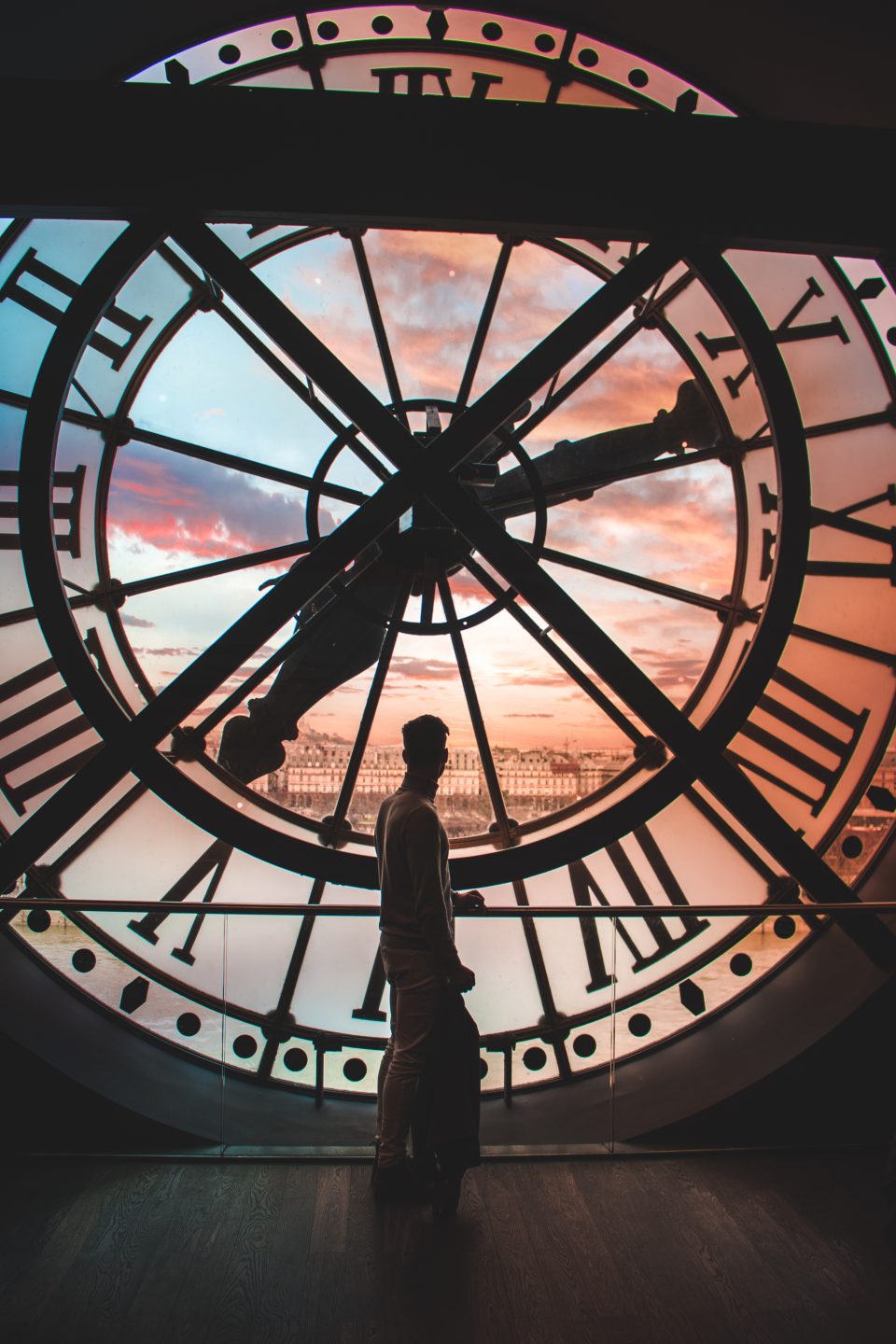
Photo by Miguel Mimoso on Scopio

Telling Time after Time

And that was a quick review of our biological time. Time is however all we have, really. And no matter how much we have left relationships and connection is an essential part of the experience.  

We have other ways of telling time. We have clocks, calendars, and diaries. With these we measure:

  • seconds
  • minutes
  • hours
  • days
  • weeks
  • months
  • years.

Other measurements of time include:

  • dates
  • holidays
  • seasons
  • birthdays
  • anniversaries
  • lifetimes
  • relationships.

Relationships are also experience time. A rhythm and a process of maturing.

Many of us experience time in relationships differently. We calculate and remember the day we meet, the number of dates we have had, our first kiss, all of our firsts. And then we start to calculate things.

Things like:

  • When will we…?
  • When will he/she/they…..? 
  • How long has it been since…..?

So many calculations. Most of these can be managed though simple communication.
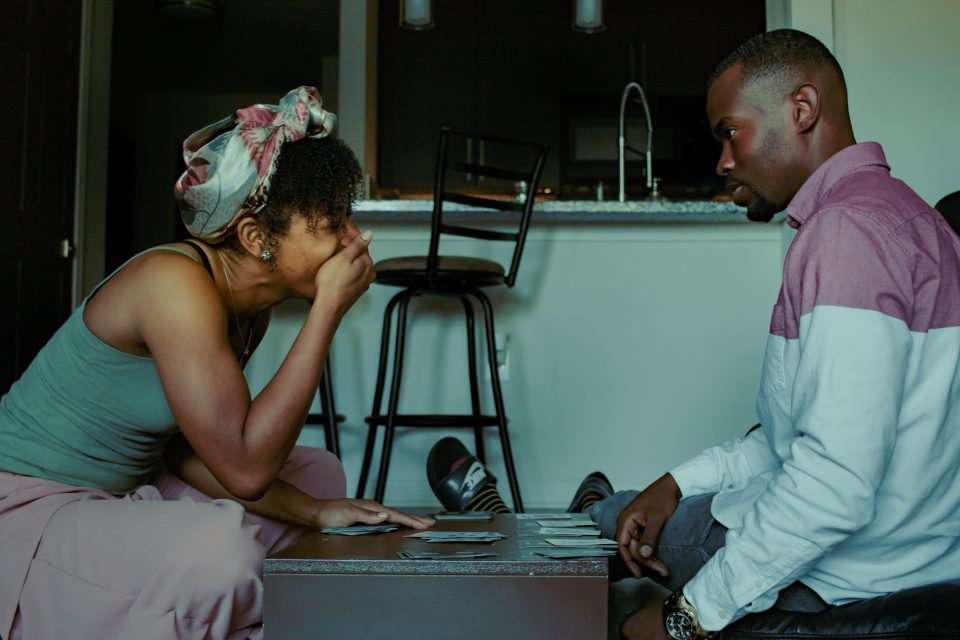
Photo by hara yi on Scopio

Do we want to…? Do you want to..? Let’s….?

These kinds of questions can help us to stay in the moment and thereby keeping our focus on ourselves and our loved one’s in the room or on the phone, computer or tablet.

And my time is up! I would really enjoy hearing your thoughts. This is Sean! Until next time. Cheers! More about me.

Uncategorized

Healthy Happy Intimate HHIA Relationships 12

Reality Check – Body (1)

Heavenly Bodies

Sean here! I am back after our exploration of fantasy and fantasies, ready to face reality.

Our reality is that we live in a body. This is a truth. Although many of us through meditation, hypnosis, video games, perhaps, or even through orgasm may have out of body experiences. The fact is: most of us spend most of our time in our physical form, our corporal reality, our bodies.

That is the way it is.

Do we like our bodies? Do we treat our bodies well?

These are choices we can make every day.

Having a body is not a choice.

Material Girl

Our bodies are how we function in the material plane, what we call life. In this vein, I thought it would be a good idea to explore some of the realities of having a body.

To start, our bodies are our connection to the material plane and our physical tool for attracting and responding to others in the third dimension, space.

Through our physical form most of us experience the world with 5 senses:

  • smell,
  • sight,
  • sound,
  • taste,
  • touch.

Smell, sight and sound are the first impressions we express to and experience about others who are close to us. Thus, our appearance, voice, breath and scent are the first signals which we give and receive.

We do have the ability to actively influence and support our first impressions and signals. We do this through grooming, speaking practice, exercise, and products. The products we may use range from deodorant to mascara and hairspray to nail varnish, all in an effort to be more attractive to ourselves and others. Taking care of our bodies and ourselves.   

Our also bodies respond to our environment, our physical wellbeing and time, our age. Let’s explore these in a bit more detail.  

Photo by Claudio Duarte on Scopio

Environmentally Speaking

Environmentally speaking there is a great quote:  

“There is no such thing as bad weather, only unsuitable clothing.”

Alfred Wainwright

This refers to our comfort in our environment. Our bodies react differently to cold, wetness, heat and dryness. These responses range from shivering and sweating to stiffening up or falling asleep and everything in between.

When we are comfortable, we move better, react more appropriately and effectively and feel better. Comfortability has to do with more than the physical environment however. We also describe the “temperature” in a room when discussing the mood or level of connection. Our bodies also respond to these emotional and intellectual “weather” conditions.

It is important to make the situation as comfortable as possible when interacting with others, especially our partners or potential partners. This can be done with conversation, a gesture or even adjusting the physical temperature in the room.

Photo by Qasim ZBH on Scopio

Hygiene

Another aspect of our bodies and our comfort is our physical well-being. How we feel in our bodies. Our physical well-being is influenced by our hygiene, our activities and our nutrition.

Hygiene is a combination of cleanliness and health. This includes washing our hair and bodies, brushing our teeth, washing our hands, combing our hair and generally presenting ourselves as being healthy and attractive to ourselves and others.

Our choice of food and drink can also affect our ability to attract and or be attracted to others. Garlic, alcohol and onions are among the more potent and long-lasting examples of odor and taste altering food and drink which can be noticed by ourselves or others afterwards. Alternatively, water and fresh fruit tend to provide a pleasant and neutral effect.

Activities like walking, stretching, exercise, and/or yoga can support our comfort and awareness in our bodies. This can be helpful when we try to bend or move in a specific way to be close to our partners.  

And so, this was a short and hopefully sweet examination of our being in three dimensions. The fourth is to come.

Time after Time

In addition, speaking of the fourth dimension: time. It is important to recognize the effect of time or age on our bodies and our relationships.

But that is all the time we have today, so next time we’ll look at age and how age affects us. This is Sean signing off for now. Take care. I would love to hear about your bodily experience and any thoughts you might have. Till next time. More about me.

Healthy Happy Intimate Adult Relationship, Uncategorized

Healthy Happy Intimate HHIA Relationships 11

Fantasy (2)

Photo by Awi Deskabelly on Scopio

Potentially Problematic Fantasies & Fantasy Objects

We are back with a bit more about Fantasy. This is Sean. Last time we spoke about fantasy and its relationship with self-consent.

All fantasies are potentially positive, instructive and helpful. Still, some fantasies express themselves within taboos, questionable events or with questionable focus. 

Private or Secret

When we think about fantasy it can be helpful to consider if the fantasy is private or a secret. To clarify, privacy is a safe and personal space where we can grow and explore ourselves. However secrets tend to be inherently, or internally considered unmentionable or wrong.

Again, we should remember that objectification is the absense of consent. This does not support the creation or development of HHIA relationships.

Objectification = Absence of Consent

In other words, the focus of our fantasies onto a specific object, when this object is unaware, unavailable, or unsuitable for HHIA relationships, can be harmful. Because we can find ourselves emotionally or physically acting out in less than ideal ways. 

Consequently finding ourselves in unhealthy, unsatisfying and even illegal situations. This depending on our fantasy object and our responses, actions and expression of those fantasies.

Photo by Ridzma Aminuddin on Scopio

Maybe not in your best interest

Fantasy objects and other fantasies that may not be in your best interest fall into three categories:

  • First: Those fantasy objects which are specific people who do not know you, whom you don’t know or who aren’t aware of your interest in them. 

The challenge of a specific unknown or unknowing fantasy object, whether it be a celebrity, an ex, or a specific stranger, is their emotional unavailability and your isolation. This disconnect between fantasy and reality can become an obsession. Thereby, restricting our ability to experience real feelings and real attraction. 

  • Second: There are four potential objects, specific objects or individuals which are unavailable for HHIA Relationships as explored in our first lesson-blog. In other words: children, animals, relatives and the no longer living.

On the one hand we have the potential real-world trouble with a specific unsuitable fantasy object: negative social cultural and legal consequences. On the other is the negative emotional response to such a fantasy object. This can be feelings of guilt, shame or humiliation.

  • Finally: The third category of fantasy object or activity which can be challenging is a fantasy which you personally find repulsive, dirty, or “wrong”. Thus, it is unmentionable or taboo for you. These can include a variety of non-conformist, alternative or violent activities.

Working with a partner or a professional to explore the reasons for your uncomfortability could be helpful.

Fantasy – Management

However, fantasies in themselves are healthy and serve a purpose as explored last time.

Because we are talking primarily about narrowing or limiting a fantasy; youth, beauty, excitement, and such, to a specific object, this focus can be avoided or averted through communication. This could be a dialogue with yourself, your partner, a close friend, or a therapist. In this way a fantasy which seems to be a secret can be transformed into a private matter for yourself or you and an intimate partner.

Photo by Awi Deskabelly on Scopio

Giving consent to ourselves and others

All fantasies can potentially be shared and explored with a (the right) partner or partners who are appropriate for an HHIA relationship. This is a choice you can make when ever you are ready. If you need or want help, please, contact me or a professional you can trust.

Thank you for your attention and consideration. I am available and interested in your questions and comments about fantasies; your own or in general. 

Next time we’ll be moving away from fantasy to explore some reality. 

Sweet dreams, till then. – More about me.

Good Sex is Healthy, Guter Sex is Gesund, Healthy Happy Intimate Adult Relationship, Uncategorized

Healthy Happy Intimate HHIA Relationships 10

Fantasy – Giving consent to yourself

Hello Everyone, This is Sean here. After our last Blog-Lesson about Objectification. I think it is a good time talk about our imaginations and fantasies.

Instructions on how to find, build, maintain, repair, and/or improve your Healthy (Happy) Intimate HHIA Relationships with yourself and others.
Photo by Lee Kitulu on Scopio

Playing Pretend, Pretending

As children many of us have an imaginary friend, play cops & robbers, play house, ride imaginary horses, fight imaginary dragons and some of us even play doctor.  

As a result, we retell, replay, and reinforce the information and images that we see, hear and experience as children. We call this pretending. As adults we pretend and call it fantasizing. Our fantasies range from the professional or social to the romantic and even erotic.  

Additionally, we can fantasize about anything we can imagine. Fantasy is a great way to explore ideas, feelings, and information we experience day in and day out.

Giving ourselves Permission

Fantasy can be thought of as giving our selves permission to imagine and think about feelings, experiences and situations. These include situations which we may or may not want to, or be ready to, experience in the real world.

In other words, fantasies are a way to process the images and values that we experience from interacting with family, friends, and colleagues. On a larger scale we process the influences of society, media and culture as well. In this sense fantasies can be considered as waking dreams which we can control.

Photo by  Zenobia Philippe on Scopio

Giving ourselves Consent

Giving ourselves consent and permission to control our internal processes, our thoughts, our desires and our stress is a very powerful experience.

Thus, as a tool fantasy can be a stress reliever and also a safe place to explore our most intimate and fragile emerging and growing selves.

Fantasy can also be a healing process where we can imagine and experience alternatives and processes internally and with others which can promote our sense of safety, strength and empowerment.

Consequently, fantasy is a both a talent and a skill which we should encourage and support in ourselves and others.

Ours alone

Our fantasies are first and foremost ours and ours alone. We have no obligation to share them with anyone. We are the sole owner and operator of our internal world which includes our fantasies. Hence, we are free and independent of all questions, comments or critique, except our own. 

Thus, fantasy is a way to better understand and recognize our own positive and negative thoughts about our own desires and pleasures: our most private pleasures and desires.

Intimate Adult Fantasies

Intimate adult fantasies can be romantic, sensual, carnal and erotic in nature. These fantasies are limitless. They can extend from exchanging a knowing smile to giving or receiving flowers. They can range from a touch or caress to intercourse. Fantasies can also explore fetishes, kink and other intimate or even violent interactions.

Fantasy is however just that, fantasy. A fantasy is an alternative to reality where we have the control. We have the safety measures in place to maintain our own beingness, independence and limits.

Photo by Zenobia Philippe on Scopio

Your Fantasy is yours

In summary, the truth about fantasy is that you have control and control consent. Your fantasy is yours and you are allowed to have it, enjoy it and modify it as you wish whenever you choose. Choosing to share a fantasy or more is another lesson.

With this in mind I am going to let you and your imagination continue on. I would love to hear your thoughts, comments or fantasies. This is Sean and next time we will explore some fantasies that might not be in your best interest and how to manage them. More about me

Healthy Happy Intimate Adult Relationship, Uncategorized

Healthy Happy Intimate HHIA Relationships 1

Blog- Lesson 1: Definitions and Parameters

Getting Started

Photo from scorpio

My name is Sean and this is my one-year (once a week) „BLOG-Lesson“, instructions on how to find, build, maintain, repair, and/or improve your relationship with yourself and others including but not limited to: a lover, lovers, a partner, partners or a spouse.

Who am I?  

What is a healthy, happy, intimate, adult (HHIA) relationship? This is a very good question. The answer for each of us is an individual one. For the purpose of this series of Blog-Lessons I have created a universal definition. A HHIA relationship is a relationship between 2 or more adults which includes intimate connections and behavior and promotes being happy and healthy.

Parameters and definitions can be helpful as a starting point and building blocks. An example is Love. Love is both a noun and a verb used to describe “(1) strong affection for another arising out of kinship or personal ties…”, “(2) …affection and tenderness felt by lovers…”  and “…2 a:  to feel a lover’s passion, devotion, or tenderness for…”.

Healthy

Healthy is an adjective meaning “…beneficial to one’s physical, mental or emotional state: conducive to or associated with good health or reduced risk of disease…“ among other things.

The complete definitions can be found at Merriam-Webster.com.

A list of definitions can be found at definitions page. Which will be added to with each Blog-Lesson.

Parameters are another essential part of our building healthy and happy relationships. These include boundaries, communication and consent.  

Establishing who can be included in healthy intimate adult relationships, is a step in the right direction towards feelings of affection which are beneficial to our good health. The healthy answer is simple. Adult Human Beings of sound mind and body can enter into adult intimate relationships.

Age of Consent

An adult is defined by Age of Consent Laws. In Europe the Age of Consent is between 14 and 18. This varies from country to country and can vary according to gender and relationship: More details can be found at ageofconsent.net.

Excluded from healthy adult intimate relationships are animals, children and non-living bodies (corpses). These three cannot consent to adult intimate behavior and are therefore exempt from healthy adult intimate relations.

Sound Mind & Body

Another aspect is a sound mind and body. For this Blog-Lesson series, a sound mind and body means awake, alert, aware, able to understand and communicate with the adult environment in which we live. Legally this is a determination by individual laws with regard to a variety of activities.

Within the parameters of who is eligible for a healthy, happy, intimate adult (HHIA) relationship; we all are as long as we are above the age of consent, awake, aware ( of sound mind & body“) and breathing. ?

If you have any questions, comments or thoughts, please contact me!

That is all for now. I will be back next time for our next Blog-Lesson in attraction and attention.